


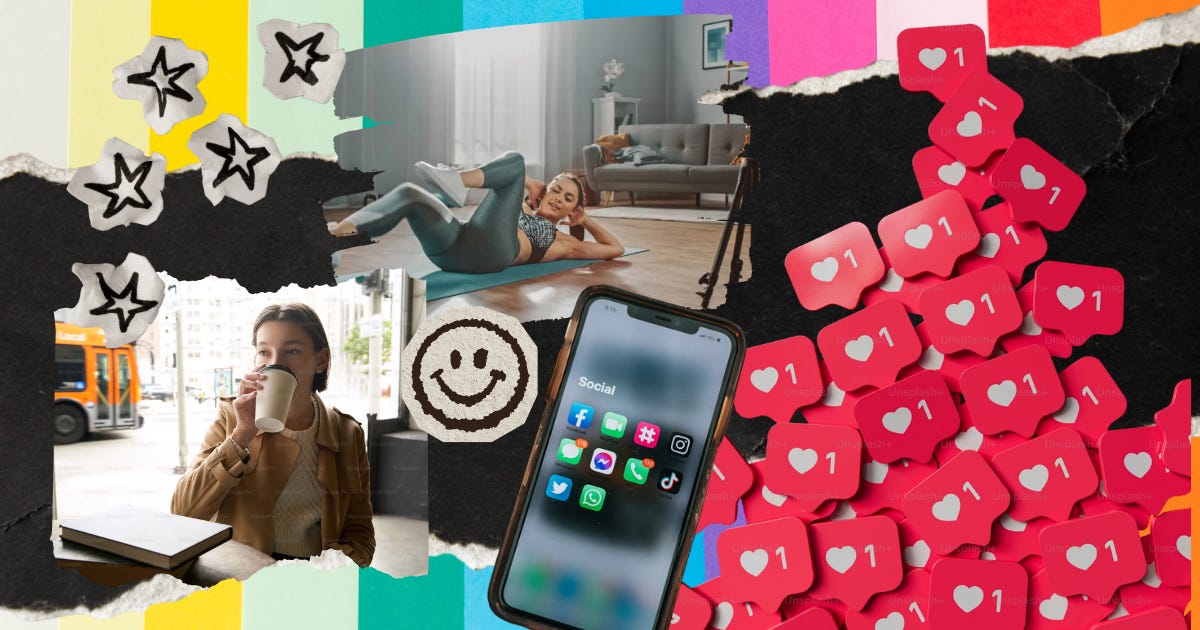
I really enjoy sitting at a cafe with my Kindle and a soy matcha. Sometimes I even take a little picture of my set up for my Instagram. Sue me if that’s ‘performative’. It’s a damn good time, and I would do it even if no one could see me. However, social media has made the private activity of reading a lot more public. I don’t just read books in cafes. I post about books on Instagram, rate books on Storygraph, and write Substacks about reading.
What does it even mean to be performative? Reading in cafes, posting about causes on social media, and recording gym workouts can all be lumped together in the ‘performative’ category. But what if those activities are actually meaningful to the person doing it? I love reading, and I love it even more when I get to read and go out somewhere. That person posting about social justice on Instagram might care for those causes deeply, or doesn’t know what else these can do to help. The gym goer posting clips from their workouts might just want to share their passion or record their progress.

What’s really performative is not the action itself, but wanting to be seen as being a better person for doing something. If you’re posting about getting up at 5am everyday, are you really doing it for you? Or are you posting to make yourself feel better than other people, or cover up the fact that you’re struggling at your job and can’t sleep at night?
The worst offender for performative posting is LinkedIn. Every life experience seems to be a lesson in business-to-business sales or online marketing. You can’t just attend the conference or breakfast talk — there has to be photographic evidence of your networking adventure. Sure, some people might be sharing their passions. But the whole purpose of LinkedIn is to make an impression on your corporate network. LinkedIn breeds performativity. But does this apply to other social networks where people are just documenting their lives?
The risk of a performative allegation can stop ordinary people from doing things they love (or could learn to love) for the sake of it or sharing their passions online. If you’re not doing something for social approval, go ahead and do the thing. As Dostoevsky once wrote: *“almost all capable people are terribly afraid of being ridiculous, and are miserable because of it.” Public failure is a requirement for many art forms. Stand up comedy is a humiliation ritual. To learn how to sing, you usually need to sing in front of other people before you’re any good. You can write without an audience, but it’s more fun if your writing is published somewhere.
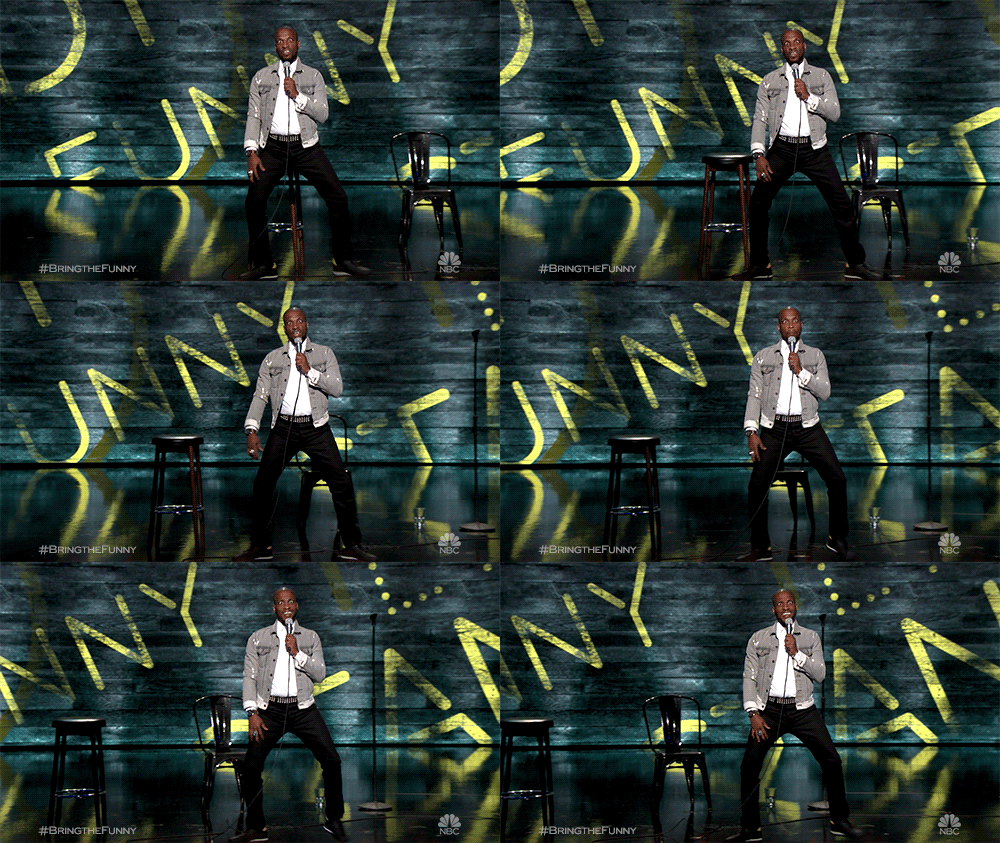
Some art forms even depend on garnering social approval. For a long time, I was doing stand up comedy. The whole point of a stand up set is to write jokes which are accepted by the crowd as being funny and illicit an immediate response. It’s impossible to just do stand up for yourself. I tried practicing in a mirror, but without the laughter it was just a monologue to my dog. The whole stand up performance depends on how you’re perceived, from your writing to your delivery and onstage persona. When I bombed, it was a failure. Sure, failure is necessary for improvement and and all that jazz. But the lack of social approval and reaction meant that my work had missed the mark. Most art forms don’t involve instantaneous feedback and humiliation. But the quick reaction to jokes drives the performance, like people trying to go viral on social media.
The problem is that social media bleeds together real life with approval and reaction. While my need for approval could be contained to a comedy set, social media pushes people to live the more private aspects of our lives in a way that’s curated for Instagram likes and TikTok videos. A new purchase could be an unboxing video. Wedding planning can be influenced by online trends and Pinterest boards. Posting reviews of books means you need beautiful shelves of colour coordinated books.
Once private activities like reading have become mediums for us to express ourselves through social media. While this can allow us to indulge in our passions and be part of a community, it can also push us to avoid things that wouldn’t give us the buzz of reaction. Maybe you don’t read a book because you’d be embarrassed to post about it online. Maybe you spend too much time at your birthday party filming for a TikTok trend, instead of connecting with your loved ones. Maybe you don’t even know what you like anymore, because you’re so attuned to the reactions of other people. You don’t need to do something just so you can post about it later.
The word performative has become an allegation that’s thrown around by the chronically online to discourage personal expression online. We are more than what we consume and what we post. But it’s okay to want to post about things that bring you joy. I like sharing a picture of my matcha and ereader not only to signal ‘hey I’m having a nice time’, but to celebrate a much loved activity.
While thinking about performativity highlights a real problem in how social media shapes our lives, it takes the focus off how the powerful are using their platforms to profit without authenticity. We should be criticising powerful people for virtue signalling without taking action. We could be talking more about Taylor Swift not speaking about Gaza and printing another vinyl variant, but instead we’re scrutinising photos someone you went to university with posted of their kid’s school lunches. Some say reading in public is performative, but let’s talk about how Amazon, the main profiteer of the book industry, is screwing its workers every day of the week. The whole idea of ‘performativity’ shouldn’t be making ordinary people fight amongst themselves. Making us worry about what normal people post online is a capitalistic strategy employed to make us point fingers at the wrong people.

I’m so glad I got off instagram before ‘performative’ became this whole thing. I can do a lot more if I don’t have to care about what other people think