


It’s 7am. You hear your alarm and grab your phone off the bedside table. Facebook, Instagram, emails. You pull yourself together and get on the train to work. Your index finger wipes through TikTok videos as if the screen is dirty.
It’s 10am. You’re bored at your desk. You reach for your phone.
At lunchtime, you sit in the corner of a sushi train near your work. You don’t look up from your phone and your favourite sushi passes you by.
5pm rolls around and you’re back at the train station, thumbing through the same apps on repeat.
You get home and watch Youtube videos until you muster up the willpower make dinner. You eat your stay stir fry with your favourite screen companion. You keep thinking ‘just one more video’, and then it’s time to go to bed.
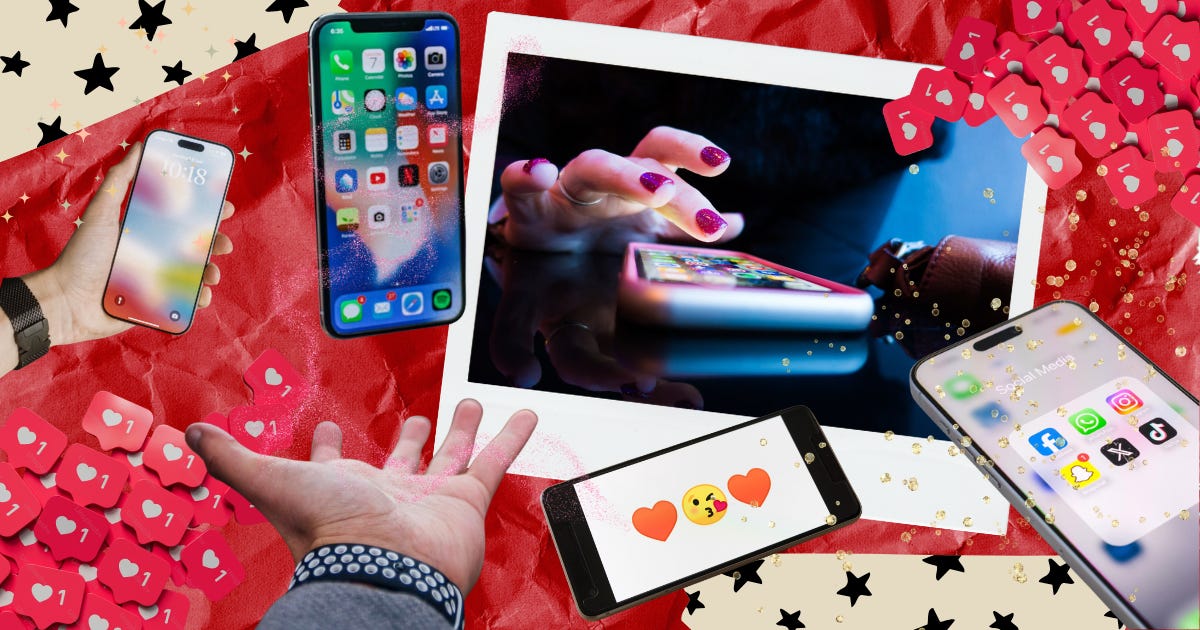
Does this sound familiar? It’s what many of us are doing every day. We’re bombarding ourselves with constant stimulation and content that’s geared towards addiction and dissatisfaction. Our phones are glued to our hands, and our eyes are glued to our screens. We become so numb to the stimulation that we don’t have the energy to do anything more fulfilling with the time we have left outside of work and sleep.
How do phones mess up our brains?
Digital consumption *feels* productive. Watching content simulates connection, but there’s no risk of being vulnerable or showing up for someone. We can feel like we are participating in meaning without creating it ourselves, or risking failure. We’re in parasocial relationships with influencers with unattainable lifestyles, becoming angered by petty drama happening between TikTokers, and spending minutes absorbed in videos of people cleaning dirty rugs. But the reality is, the more we consume, the less meaning we create in our lives.
Phone addiction rewires your brain’s reward and stress systems. When we are not stimulated, our brains switch into the Default Mode Network (DMN). This is how we contemplate and daydream. Switching into DRN is necessary for emotional processing, social interaction and reflection. When you seek out stimulation through your phone, the DMN deactivates. You’re essentially using the phone as an escape from your own mind. Maybe you’re not really addicted to the phone, but addicted to switching off the discomfort of sitting with your thoughts.
Phones are essentially a pocket-sized poker machine that spits out dopamine instead of money. Dopamine is what makes us chase rewards, and does not require actually finding rewards. It’s about wanting not liking. The rewards of phones and social media are inconsistent are variable, which is what keeps you hooked. Your brain releases dopamine when you’re searching for a reward. The reward could be a really interesting video, a photo of your ex looking poorly, or likes on your new Instagram post. You don’t know which app will give you the hit or when. So you switch from app to app, video to video, looking for your fix. Eventually picking up your phone becomes an automatic response to triggers like boredom, notifications, or discomfort. Your brain has decided that this behaviour is the optimal response to the trigger.
Heavy phone usage can also lead to the thinning of the inner cerebral cortex. This is the part of the brain responsible for decision-making and problem solving. Researchers have found that smartphone addicts “show difficulties in language processing, emotional processing, auditory processing, and visual information processing.” Being addicted to your phone can have far more wide reaching consequences than screen time.
Passive scrolling is like feeding your brain a diet of Coke Zero. It might give you some energy in the moment, but where’s the nutrition coming from? Our brains need a varied ‘diet’ that consists of more intentional activities that involve connecting, creating, caring and finding meaning. Over time, smartphone addiction depletes our ability to regulate our emotions without instant stimulation. As you build tolerance to the domaine loop, the phone leaves you with an empty coping mechanism that feels inescapable.
Pleasure and pain are in overlapping regions of the brain. They’re basically on a see saw which wants to remain level. If you press on pain, pleasure will pop back up to level, and vice versa. Tipping the scale too far in favour of pleasure has a cost. When you press on the pleasure side for too long with digital stimulation, your brain compensates with pain. This brings you back to the apps again. The more we seek pleasure from a stimulus, the level of pleasure gets weaker, and the time period we experience it gets shorter. But the pain response becomes more intense. When we become tolerant to the stimulus, we seek out more novel or stronger forms. Ironically, our pursuit for pleasure makes the good feelings more unattainable.
So how do we fix it?
The good news is that, with some work, you can rewire your brain. You need time to start by stopping giving your brain a way out of the discomfortable feelings that can come with DMN. This means not only restricting scrolling, but not being entertained by music, podcasts and audiobooks every waking second. Start daydreaming. Shower in silence. Quit taking your phone to the bathroom.
The next step is finding replacements for screen time. This could be hobbies, phone calls to friends and exercise. I also like to use single use devices to keep me off my phone. For example, I send Substack articles to an ereader so I can peruse them offline like my own personal magazine. The real rewards come when we immerse ourselves fully in our lives. This involves facing our problems without a digital escape hatch, and taking the risks that come with offline life.
You can also try limiting apps to other devices. For example, for a while, I deleted Instagram off my phone but kept it on my iPad. For some reason, I’m less likely to doomscroll on an iPad and it is a device that I usually only use at home. You don’t have to delete social media, but Facebook and Instagram are a lot less appealing when you can only access them from a desktop computer or laptop.
You need to put in place rules and boundaries for your phone usage. Create friction for the behaviours you want to control. This could be setting app timers, deleting apps off your phone, or putting your phone in a different room while you work. Carve out windows of phone free time in your schedule. Turning off your notifcations can at least stop one trigger that could make you pick up the device.
The most important thing is to find meaning outside of a tiny screen. Instead of doomscrolling, you could be reading books, creating something new or connecting with your community. Smartphones have made us forget how who we used to be, and how we entertain ourselves. The family computer used to be a destination where you could sit and play the Sims or talk to friends on MSN, and then leave. Having tiny entertainment machines in reach at all times means that we have to push a bit harder to do things that will bring lasting joy. The version of yourself that you want to become is built by replacing bad habits with more intentional ones.
Th problem of phone addiction seems is so obvious, but it’s hard to break away from an attention economy profiting off keeping out screens lit up. Fighting against apps which are created to exploit addiction means that we need to have patience with ourselves. There are whole teams of app developers testing and designing features to keep our eyes on the screen. Don’t beat yourself up if you fall victim to their schemes.
When you’re facing any kind of addiction, the risk of relapse is high. But it’s important to not let a ‘slip’ turn into a ’slide’. If your phone habits start to deteriorate after some success, take a breath and try again.
love this!!! so well written and so necessary. your page is obscenely underrated!!! xx
A much needed post. I love your ideas around consumption and the amount of meaning that we have in our lives. Amazing read, thank you for sharing 👏💕✨