


I started getting into BookTok in 2024. I’ve mostly been a fan, but I did briefly try to make my own TikTok videos. I’ve found a lot of great books, but often I find myself swiping through BookTok instead of actually reading.
BookTok refers to the online book community on TikTok. Creators pose in front of full shelves talking about the books they love, the books they hate, and their endless TBRs (To Be Reads). BookTok has launched the careers of many writers, including Colleen Hoover, Taylor Jenkins Reid and Ali Hazelwood.
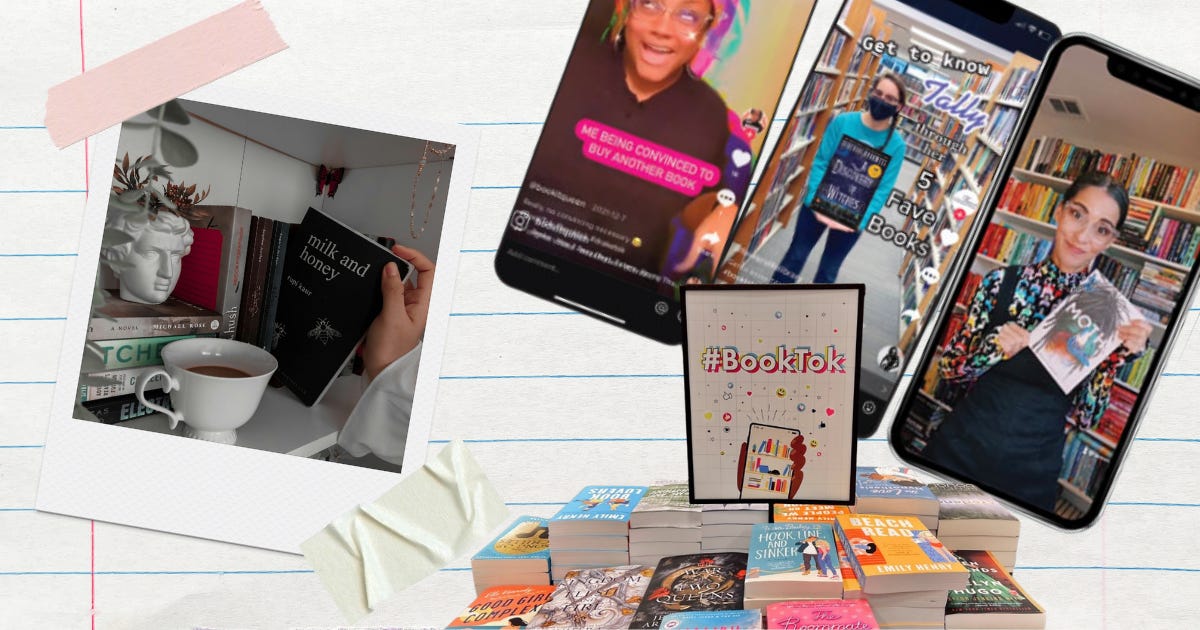
BookTok seems to have made a private hobby into something more public and democratic. But is this a good thing? I think there are a few main issues with BookTok: the endless recommendations spiral, reaching for viral success, comparison and competition, and spruiking reading related products, such as reading devices and accessories.
Book recommendation paralysis
What sucks you into BookTok is the sheer volume of recommendations. I found my favourite books, The Stationery Shop (Marian Kamali) and The Nightingale (Kristin Hannah), on BookTok. The Nightingale is so popular that I probably would have found it by myself, but I’m not sure I would have come across The Stationery Shop.
Some of the videos are detailed reviews about a single book. While others have less substance, palming through a pile of books with a simple yes/no/maybe. Many videos give recommendations for books based on something you’ve already read, without any further context. One of the positives of having so many reviews and recommendations is that you can follow creators with similar taste.
Of course, trying to optimise your reading experience can be a paradox. Limiting your reading to BookTok recommendations or books with a certain Goodreads rating might mean that you don’t read many ‘bad’ books. But this completely removes the serendipity of pulling my books off a shelf a book shop. It stops the connection found in reading a book your friend recommended. It means you don’t take the risk on a small indie author you find at a writers festival.
Trying to keep up with BookTok recommendations can also be overwhelming. I have a list of about 70 books I want to read in the next year or so. But the problem is, I keep watching more videos and adding to it. Adding books to your TBR or buying books is a separate hobby that can devalue actual reading. If you’re alway thinking about what you’ll read next, it takes away from absorbing and appreciating what you’re reading right now. If you’re spending a lot of time looking through recommendations instead of just picking something up, this can leave you in a sort of book recommendation paralysis.
Many creators make light of their overconsumption. *Oh I had the ebook, but I needed the physical book as a trophy. Look at my 200 book physical TBR.* One creator recently was in hot water for showing off special editions of Mein Kampf. Books are both art and a product. If you’re constantly looking for the next book to consume, you’re seeing books as a commodity.
Collecting books is often the focus of BookTok rather than actually reading. TikTok rewards users with a certain aesthetic, which leads to a lot of repetitive content that can only be achieved by buying the right shelves, the right books and the right ereader accessories. If you’re always collecting, adding to your TBR list, or watching videos about books, that’s time you could have spent reading.
Viral success
Books like Fourth Wing, The Seven Husbands of Evelyn Hugo and The Housemaid would not have had the same success without BookTok. But what makes a viral success? Authors are expected not only to write a fantastic novel, but something that marketable on a particular platform.
In 2026, everyone is talking about Yesteryear, about a trad wife influencer being thrust back into pioneer times to live the life she’s promoting. I’ll admit this is on my ‘to be read’ list, so I’ve been influenced. Anne Hatheway has picked up the movie rights. Interestingly, Hatheway was mentioned in the acknowledgements of the book. It makes you wonder, was this book set up for viral TikTok success to promote the upcoming movie? Considering Hatheway’s involvement, the success of the book on TikTok seems like more than the organic success of a story that was just so well loved by users that they promoted it for free.
Truely, TikTok is an advertising platform. But instead of only pushing sponsored videos, most of the advertising is created for free by users who want to monetise their content. Sure, users will review and promote books they’re fans of. But to monetise, they need to jump on trends and talk about the books everyone else is talking about. This means that a lot of the recommendations are disingenuous. BookTokers ask themselves ‘what content will get views and earn me money?’ This intent is hidden behind smiling faces and hooks, so it seems that the most popular books of BookTok are just the best.
The problem with finding books with an algorithm is that everyone ends up reading and talking about the same books and authors. I’ve seen countless videos of people rating Freida McFadden’s books, but I haven’t seen much content on similar authors. Fast paced thrillers written by women are abundant, but they’re not floating to the top of my FYP because they’re not pulling views.
Then there’s the single-minded focus on tropes. Reducing books to tropes completely spoils the plots, and encourages people to read the same sort of stories over and over again. This is also leading to changes in publishing, with reports that some publishers are only accepting submissions with ‘TikTok buzzwords.’ Focusing on tropes is just another way the algorithm is trying to push an experience that seems so personalised that you can’t leave the platform, and stay glued to advertisements that seem like they’re made specifically for you.
Algorithms prefer extremes and simplification over context. It’s about monetisation, not nuanced, thoughtful discussions of books or advancing literature. Sure, a yes/no/maybe video might help you find a new book. But the creator made that video to keep up with a trend on a monetised platform, with books recommended to them from the same algorithm. It’s a cycle.
Let’s talk about ereaders
Before BookTok, I didn’t know that it was possible to overconsume ereaders. I’ve seen multiple videos of people sorting through stacks of reading devices as if they’re choosing their outfit for the day. There’s countless videos of people showing off multiple ereaders and explaining why they needed another device to do almost the same thing.
One thing that gets to me about BookTok is the pressure to make reading an aesthetic experience. BookTok usually film in front of shelves with perfectly organised shelves and sprayer edge special editions. But that’s not where it ends. There’s a whole niche for videos of people decorating their Kindle with charms, pop sockets and stickers from Amazon. They don’t just do this when they first get the Kindle. Sometimes they feel the need to do a ‘refresh’ with a new charm, new stickers, and more plastic. There are some users who turn the Kindle refresh into an art project by making their own inserts in Canva. But for most, it’s about unboxing the accessory purchases.
I must admit I have fallen victim to some of BookTok’s charms. I own two ereaders - a Kindle Paperwhite and a Boox Palma 2. I bought the Boox as an anti-scrolling device. Unlike the Kindle, it can use apps like Instapaper and Libby. It’s also small enough to fit in most handbags. I probably would not have bought the Boox without BookTok’s input, but I believe it has been a significant life upgrade that’s encouraged me to read more.
The back of my Kindle Paperwhite is already covered in stickers, so I don’t know why I can’t pull my eyes away from the ‘refresh’ videos. I know that every minute I watch videos about ereaders is time I could have spent using my ereader. But there’s something about living through someone else’s experience of putting stickers on plastic.
Is reading a sport?
Many BookTokers treat reading like a competitive sport, posting the 20 books they read in the last month or subtlety bragging about how read 100 books in a year. Reading any books should be celebrated, but BookTok makes it a bit too easy to compare your reading journey to others.
BookTok has turned the private joy of reading into a public activity. Participants can be made to feel like they need to inhale books to keep up with discourse and trends. But what happened to savouring the pages?
The reality is that to be able to keep up with posting, BookTokers need to read enough to have content. This often means that quality of reading is traded for quantity and a lack of critical engagement. It’s the same authors, aesthetics, trends and tropes on repeat. Churning out content does not bode well for originality or thorough textual analysis.
I’ve seen classic literature reduced to a yes/no/maybe. Popular books are frequently distilled into rankings or five star ratings without further explanation. Maybe the point is to prioritise individual enjoyment over literary critique. But I feel like quick content gets more views and is easier to push out on a frequent schedule. While BookTok may have given me some decent recommendations, I can’t help but feel like it’s commodifying the reading experience. Everyone is reading the same books, making the same videos, and posting the same takes.
Conclusion
On the one hand, BookTok is commodifying literature and making publishing more predictable. Boo. BookTok is about reading more, buying more and making more content rather than deeply engaging in the text. But is BookTok encouraging people to read? BookTok will support you whether you read romance books with cartoon characters on the cover, or literary classics. It’s an accessible resource that at least pretends to make reading fun.
Maybe the reality of BookTok, and short form content in general, is that we’ve lost patience for the slowness of life and reading. BookTok offers a reading flavoured escape from reality, rather than a meaningful reading companion. Devouring more and more content makes you feel like you’re being productive - you’re thinking about reading. But you’ve just been sucked into another short form video rabbit hole that promises to change your life. The goal of short form content is not encouragement or support, but addiction. BookTokers are performing for views and monetisation, which keeps you on the platform, and serves TikTok’s advertisers.
Like any short form content, I think BookTok should be handled with a great deal of caution. It’s all in good fun, as long as you’re aware that BookTok is trying to sell reading to you, and optimisation should not be the goal. Read more widely than the books that BookTok feeds you. Think more deeply about what you read than what five star rating you would give a book. Don’t give into the commodification of books and the pressure to buy and inhale literature. Most of all, put the damn phone down and read.